

Sushi Restaurant Etiquette: What Diners Should Know
Stepping into a traditional dining establishment dedicated to Japanese cuisine offers a truly remarkable culinary journey. The precise cuts of fish, the perfectly seasoned rice, and the elegant atmosphere command a unique level of respect from guests. However, visiting a Sushi Restaurant comes with a specific set of unwritten rules that can easily confuse first-time visitors and experienced food enthusiasts alike. Proper etiquette honors the chef’s meticulous craftsmanship and elevates your entire dining experience. By understanding the cultural nuances of ordering, eating, and interacting with the staff, you transform a simple meal into a graceful appreciation of culinary art. This comprehensive guide will walk you through the essential etiquette rules you need to know. You will learn exactly how to interact with the chef, master the proper use of condiments, and handle your food with confidence and respect.
Mastering the Basics of Sushi Restaurant Dining
Your experience begins the moment you walk through the doors. How you seat yourself and approach the menu sets the tone for the entire meal. Understanding the foundational rules of the dining room ensures you show immediate respect to the establishment and its staff.
How to Seat Yourself at a Sushi Restaurant
When you enter the building, the staff will likely greet you with a warm “Irasshaimase,” which means “welcome to the store.” You should acknowledge this greeting with a polite nod or a simple smile. You will then need to choose your seating area. Most establishments offer standard tables and seating directly at the chef’s counter. If you want a quick, casual meal with friends, a standard table provides the best environment for private conversation.
However, if you want a truly immersive experience, request a seat at the counter. The counter is a place of reverence where you interact directly with the culinary master. You should only sit at the counter if you plan to order traditional nigiri or sashimi directly from the chef. Do not sit at the counter if you only plan to order hot kitchen items like teriyaki or udon noodles, as this takes up valuable space meant for specialized dining.
Ordering Etiquette at a Traditional Sushi Restaurant
Once seated, you must understand the proper flow of ordering. If you sit at a standard table, you will place your entire order with your server. If you sit at the counter, you split your ordering duties. You should always order your drinks, hot appetizers, and soups from the waitstaff. You only order your raw fish dishes directly from the chef standing in front of you.
When ordering from the chef, pace yourself. Do not overwhelm them by shouting out a massive list of ten different fish at once. Order a few pieces at a time. This allows the chef to prepare your food at the perfect pace, ensuring the rice remains warm and the fish remains at the ideal temperature when it reaches your plate. Ask the chef what is fresh or in season, as this shows great respect for their expertise and ingredient selection.
Interacting with the Chef in a Sushi Restaurant
The chefs who prepare your food spend decades mastering their craft. They deserve a high level of respect and courtesy. Your interaction with them can significantly influence the quality of your dining experience.
The Art of Conversation at the Sushi Restaurant Bar
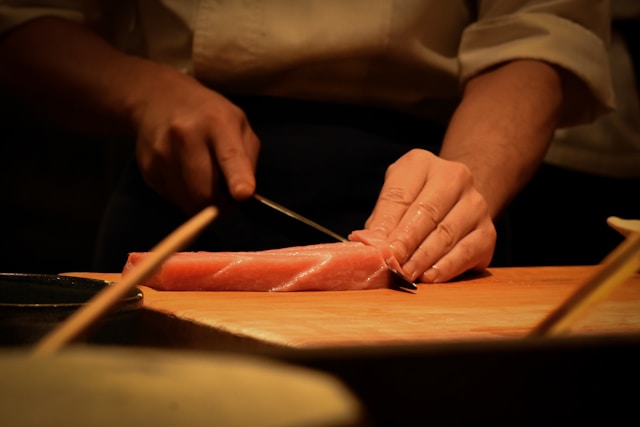
Sitting at the counter allows you to observe a master artisan at work. It is perfectly acceptable to converse with the chef, but you must read the room. If the restaurant is incredibly busy and the chef is rushing to fill orders, keep your interactions brief and polite. Do not distract them with long, complicated stories when they hold a sharp knife.
When the chef hands you a piece of food, you should accept it graciously. A simple “arigato” (thank you) goes a long way. Never ask the chef how fresh the fish is, as this implies you doubt their commitment to quality. Instead, ask them what they recommend today. This simple question flatters their expertise and usually results in them serving you the absolute best cuts of fish available in the kitchen.
Trusting the Chef: The Sushi Restaurant Omakase Experience
If you want the ultimate culinary adventure, you should order “omakase.” This term translates to “I leave it up to you.” When you order omakase, you surrender completely to the chef’s vision. You do not look at a menu or request specific rolls. The chef will carefully curate a multi-course tasting menu based on the finest ingredients they have that specific day.
When you commit to omakase, you must be open-minded. You should eat whatever the chef places in front of you. Refusing a piece of fish or asking for a substitution during an omakase service is highly disrespectful. The chef meticulously plans the progression of flavors, usually starting with light, white fish and moving toward richer, fattier cuts like tuna belly or sea urchin. Trusting their sequence guarantees a perfectly balanced and unforgettable meal.
Proper Condiment Use in a Sushi Restaurant
Condiments exist to enhance the flavor of the fish, not to overpower it. Many diners make crucial mistakes when using soy sauce, ginger, and wasabi. Using these items incorrectly masks the delicate flavors the chef worked so hard to balance.
Soy Sauce Secrets for Sushi Restaurant Guests
Soy sauce requires a delicate touch. You should never fill your small dish to the brim with soy sauce. Pour a very small amount into the dish, and add more later only if you absolutely need it. Wasting soy sauce is frowned upon in Japanese dining culture.
When dipping your food, never submerge the rice into the soy sauce. The rice acts like a sponge and will instantly absorb too much sodium, completely ruining the structural integrity of the bite and destroying the flavor profile. Instead, gently turn the piece of nigiri upside down and lightly dip only the fish into the soy sauce. If a piece of food comes to you already brushed with a glaze or sauce by the chef, do not dip it in soy sauce at all. The chef has already perfectly seasoned that specific bite for you.
Wasabi and Ginger Rules at a Sushi Restaurant
Many Western diners love to mix a large clump of wasabi directly into their soy sauce to create a spicy paste. You should never do this at a high-quality establishment. The chef already places the perfect amount of wasabi between the rice and the fish during preparation. Adding more insults their ability to balance the flavor. If you truly need extra heat, place a tiny dab of wasabi directly onto the fish.
Pickled ginger, known as gari, also has a very specific purpose. You should never eat ginger at the exact same time as your fish. Ginger acts solely as a palate cleanser. You eat a small slice of ginger between different types of fish to clear your tasting senses. Placing a piece of ginger on top of your fish completely overwhelms the delicate flavor of the seafood and is considered a major faux pas.
Eating Etiquette for the Perfect Sushi Restaurant Experience
How you physically handle and consume the food matters just as much as how you order it. Proper eating techniques ensure you experience the textures and flavors exactly as the chef intended.
Chopsticks vs. Hands in a Sushi Restaurant
A common misconception is that you must always use chopsticks. In reality, tradition dictates that you should eat nigiri (fish pressed over rice) with your clean hands. Using your fingers allows you to feel the texture of the fish and gently turn it upside down to dip into the soy sauce without breaking the rice apart. You gently grasp the sides of the nigiri with your thumb and middle finger.
Sashimi (slices of raw fish without rice), however, strictly requires chopsticks. You should never eat sashimi with your hands. When you are not using your chopsticks, place them neatly on the provided chopstick rest. Never rub your wooden chopsticks together to remove splinters. This implies that the establishment provides cheap, low-quality utensils, which is highly offensive to the owner.
Consuming the Food Correctly
The chef designs each piece of nigiri to be eaten in exactly one bite. Biting a piece of fish in half and placing the remainder back on your plate disrupts the careful balance of fish, rice, and wasabi. It also looks incredibly messy. You should place the entire piece in your mouth at once. Furthermore, you should try to place the fish side down on your tongue first. This allows your taste buds to immediately register the flavor of the seafood before the starchiness of the rice takes over.
Pacing is also critical. When the chef places a piece of nigiri in front of you, you should eat it immediately. The chef carefully monitors the temperature of the rice, aiming to serve it at exactly body temperature. Letting the food sit on your plate for several minutes while you talk or check your phone ruins the temperature contrast between the warm rice and the cool fish. Show respect for the chef’s timing by consuming the food right away.
Conclusion
Navigating the subtle rules of Japanese dining etiquette does not have to be a stressful endeavor. These traditions exist to maximize your enjoyment of the food and to show proper respect to the skilled artisans preparing your meal. By understanding how to properly interact with the chef, moderately apply condiments, and handle your food correctly, you demonstrate an appreciation for the culinary culture. The next time you visit a traditional establishment, put these guidelines into practice. You will undoubtedly experience the nuanced flavors of the cuisine in a much more profound and authentic way. Take these principles with you on your next culinary adventure and enjoy the beautiful artistry of raw fish.